If your business sends freight, two terms are worth understanding: NHVR compliance and load restraint. They sit behind every safe, legal truck movement, and they affect you even if you never drive a truck yourself. This guide explains what they mean and why they matter to a business that ships goods.
We'll keep it practical. The goal isn't to turn you into a compliance officer, it's to help you understand what good practice looks like and why it protects your freight and your business.
What is the NHVR?
The NHVR is the National Heavy Vehicle Regulator, the body that administers the Heavy Vehicle National Law across most of Australia. It sets and enforces the standards for heavy-vehicle safety, covering things like vehicle maintenance, mass and dimension limits, driver fatigue and load restraint.
When a transport company describes itself as NHVR compliant, it means they operate to those standards. For you as a customer, that's a signal the carrier runs their vehicles and drivers properly rather than cutting corners.
Why load restraint matters
Load restraint is exactly what it sounds like, keeping freight secured so it doesn't move while the truck is travelling. It's one of the most important safety issues in road transport, because an unrestrained or poorly restrained load can shift, fall off, or cause a driver to lose control.
The consequences range from damaged freight to serious crashes. Restraint isn't a formality, it's the thing standing between your pallets and the road.
What the load restraint rules require
The principle behind the rules is that a load must be restrained so it can't move in a way that affects the vehicle's stability or safety, under the forces a truck experiences when braking, accelerating and cornering. In plain terms, the freight has to stay put no matter what the truck does on the road.
Meeting that reliably takes the right equipment and the knowledge to use it. This is where load-rated gear comes in.
What load-rated equipment means
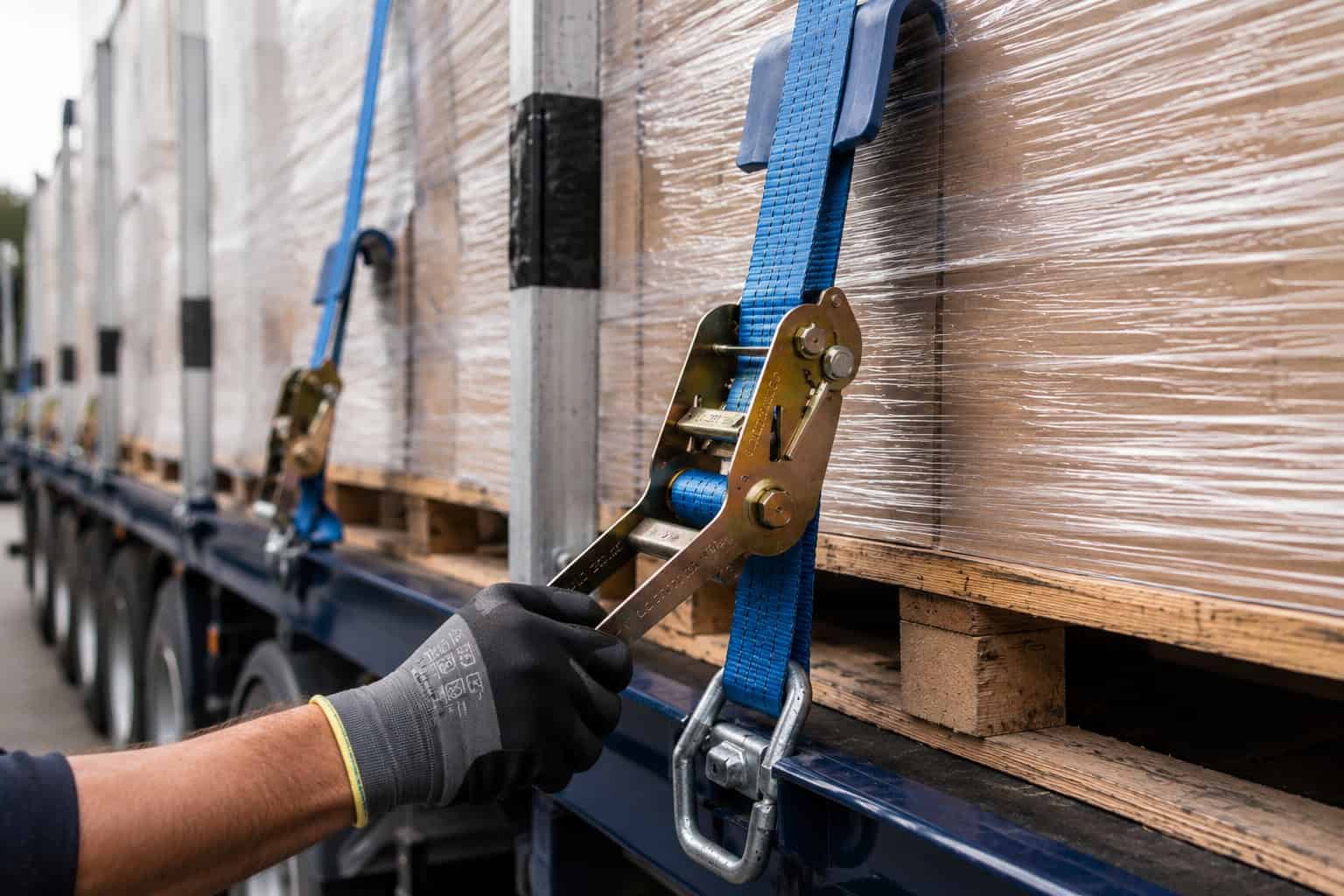
Load-rated restraint equipment, such as rated straps, chains and curtains, is engineered and certified to hold a stated load rating. Instead of guessing whether a strap is strong enough, a driver using load-rated gear knows the rating and can restrain the freight to it.
The difference matters. General-purpose straps used without regard to rating might hold, or might not. Load-rated equipment, used properly, restrains freight to a known standard every time. It also tends to be faster to work with, because the system is designed for the job rather than improvised.
Why this matters to you as a shipper
You might wonder why any of this is your concern if you're just sending freight. There are two reasons. First, under Chain of Responsibility, businesses that load or send freight share legal responsibility for it being safe, so poor restraint from your dock can come back to you. Second, well-restrained freight simply arrives in better shape, because a load that doesn't move is a load that doesn't get damaged.
So good load restraint isn't just a legal nicety. It protects your goods, your customers and your business at the same time.
What to look for in a carrier
When you're choosing who moves your freight, a few questions tell you a lot. Do they run load-rated restraint equipment? Are their drivers trained in load restraint? Are they NHVR compliant and do they maintain their vehicles to standard? A carrier who answers those clearly and confidently is one taking the job seriously.
How Road Linx handles it
At Road Linx, load-rated restraint is standard across our fleet, and our drivers are trained to restrain freight to rating on every load. We operate as an NHVR-compliant business and work to Chain of Responsibility on every job. For you, that means freight that travels safely and legally, and a carrier that's helping keep your own business compliant as part of the chain. This article is general information, not legal or compliance advice; for your specific obligations, refer to the NHVR or a qualified adviser.
The basic methods of load restraint
Load restraint generally works through a few methods, often used together. Tie-down uses straps or chains over the load to press it onto the deck so friction holds it in place. Blocking or containment uses headboards, gates, racks or the trailer structure to physically stop the load from moving. Direct restraint lashes the load to anchor points so it can't shift.
Which method suits depends on the freight. Palletised stock in a tautliner leans on containment from the curtains and gates plus friction. Steel or machinery on a flat-top relies on direct lashing with rated chains. Getting the combination right is the driver's job, and it's why training and rated equipment matter so much.
You don't need to master this yourself. But knowing the basics helps you understand why a good carrier takes a few minutes to restrain a load properly, and why that time is worth it.
The bottom line
NHVR compliance and proper load restraint sit behind every safe truck movement, and they protect your freight and your business as much as the driver. When choosing a carrier, favour one that runs load-rated equipment, trains its drivers and can talk clearly about how it secures loads.